Shanghai Zhongqiao Polytechnic University has recently launched a comprehensive and systematic optimization of its school architecture, advancing the renaming, division, and realignment of multiple schools and their respective programs. This restructuring marks a pivotal transformation in the university's educational model: breaking away from the traditional discipline-based school approach and fully embracing an industry-based school model, with industrial cluster layout as its core logic, to proactively align with national strategic priorities and the evolving needs of regional industrial development.
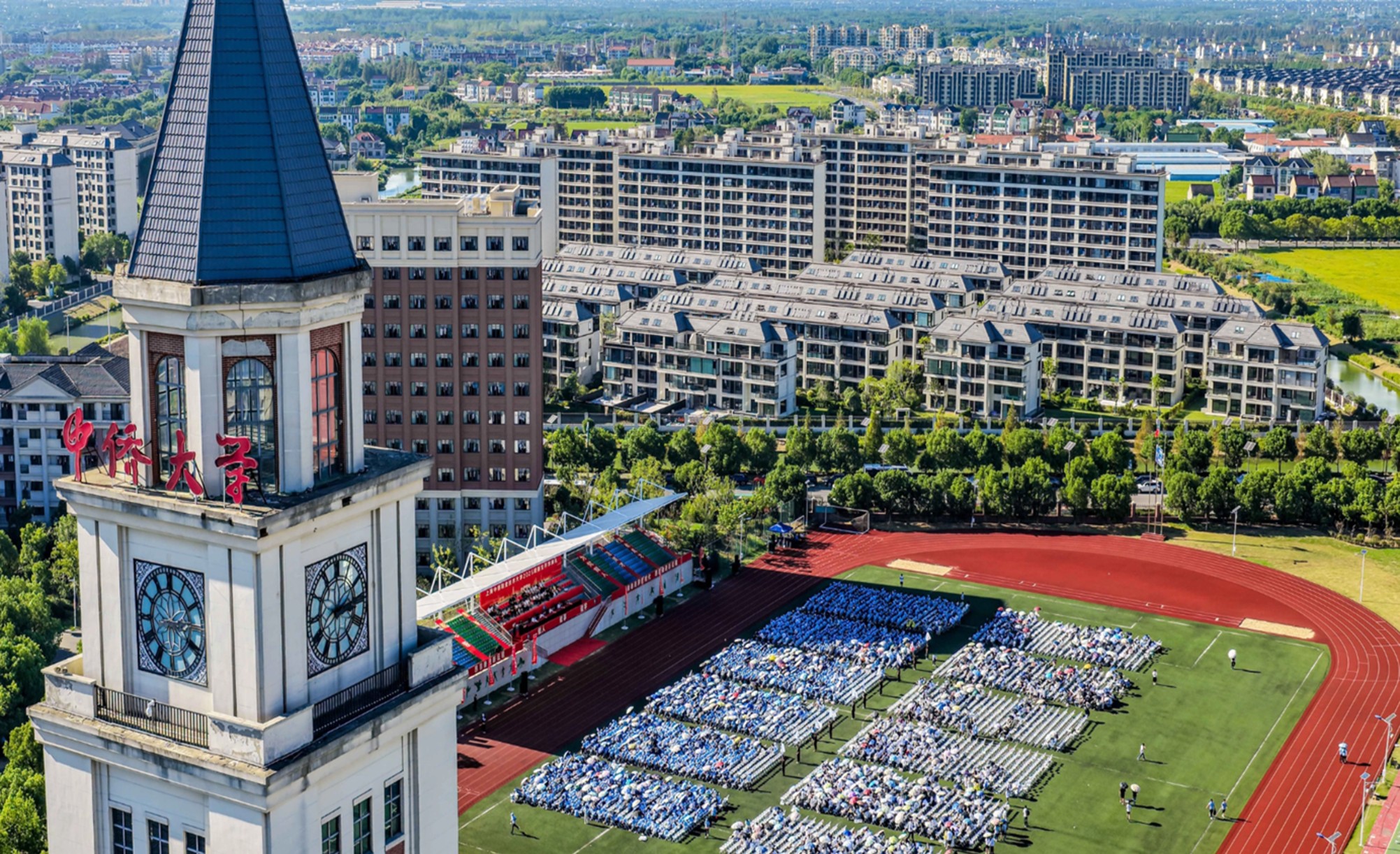
From Discipline-Based to Industry-Based
This school reform represents a thorough review and innovation grounded in the developmental laws of modern vocational education. Closely aligned with national strategic deployments and Shanghai's overall industrial layout, the university has systematically restructured and optimized its existing school architecture. The university now comprises 12 schools: School of Artificial Intelligence, School of Low-Altitude Technology, School of Intelligent Manufacturing, School of Automotive Engineering, School of Food and Pharmaceutical Sciences, School of Urban Renewal, School of Nursing and Health, School of Digital Commerce, School of Culinary and Hotel Management, School of Digital Creativity, Zhongqiao-Helsinki School of Future Engineering, and School of International Education. The disciplinary and programmatic layout is now more focused and structurally clearer.
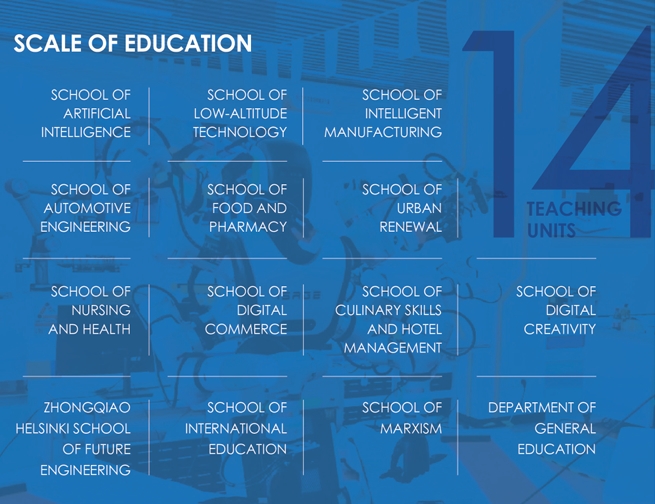
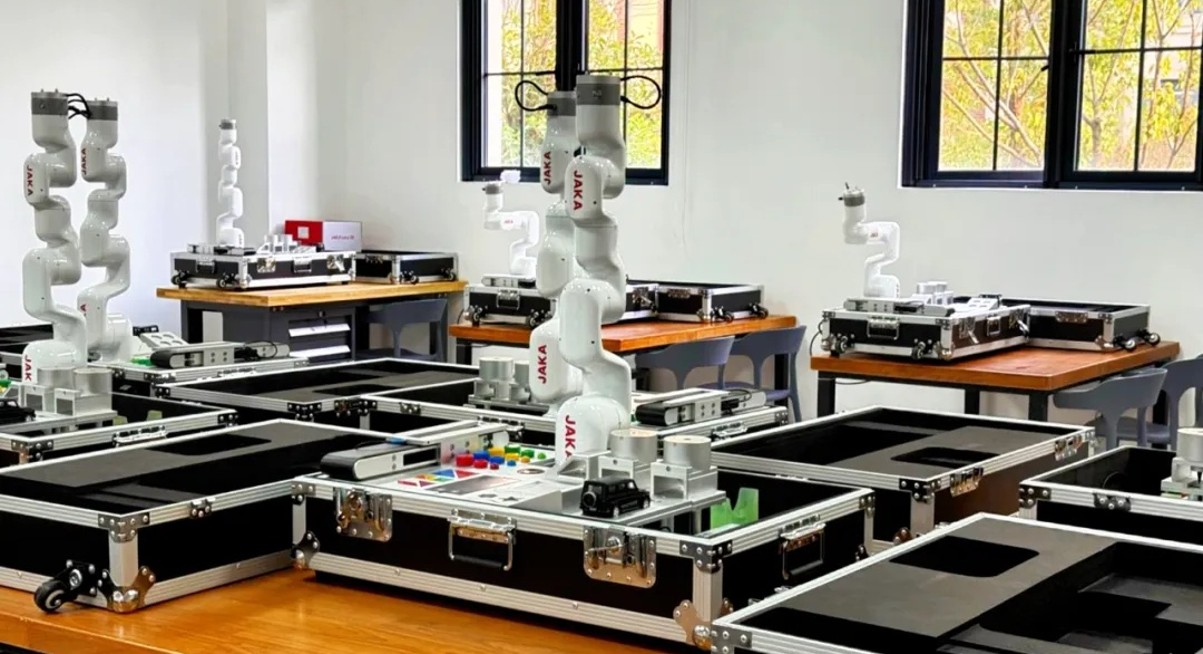
As a vocational university committed to cultivating high-skilled talent for industry, Shanghai Zhongqiao Polytechnic University's school architecture is built upon precise understanding of industrial demands. The university has explicitly stated its goal to accurately grasp the mapping relationship between industry and program structure, reorganizing program clusters according to the principles of similar technical domains, shared foundational knowledge, related employment positions, and shared teaching resources. Schools are no longer established according to disciplinary catalogs but are fully organized around industrial chains. This shift in thinking means that schools are no longer closed administrative units, but open teaching units deeply coupled with industrial ecosystems. Under the new architecture, each school's focus areas are clearer, synergies between programs are more pronounced, and resource allocation has shifted from scattered efforts to focused strengths, fundamentally reshaping the alignment mechanism between talent cultivation and industrial demand.
New Architecture Responding to New Industrial Directions
In this restructuring, existing schools have been repositioned according to the directions of national strategic emerging industries and regional key industries. Some schools have been renamed to focus on digital creativity, urban renewal, digital commerce, and other fields; others have been divided based on significant differences in technical domains, focusing respectively on intelligent manufacturing and new energy vehicles, artificial intelligence and low-altitude economy, among other tracks. Concurrently, the university has made fine-tuned adjustments to the affiliation of certain programs, ensuring that each program operates within the most suitable industrial ecological niche.
In this restructuring, the establishment or renaming of each new school corresponds to a clear industrial chain or technical domain, collectively forming a program system highly matched with the regional industrial structure.
Connotation Development Advancing in Parallel
The adjustment of school architecture is the first step; deeper transformation lies in the reconstruction of program clusters and the upgrading of industry-education integration platforms. Synchronized with this restructuring, the university has planned a number of key connotation construction projects around new quality productive forces in critical areas such as intelligent manufacturing, new energy vehicles, and low-altitude economy, striving to build high-level industry-education integration platforms that integrate teaching and practical training, skills certification, technology R&D, production services, and social training.
These projects serve increasingly diverse needs, extending from advanced manufacturing to commercial circulation, smart catering, and other consumer service industries. The capacity of practical training continues to advance, progressing from basic training to industrial pilot testing and real enterprise testing. Some projects have introduced real business orders from enterprises and a front-store, back-factory productive training model, achieving deep integration of teaching and production. They have also filled previous gaps in areas such as marine engineering, industrial internet, and food testing, making the program layout's coverage of regional industries more comprehensive. Multiple projects have received substantial investment from enterprises, further solidifying the cooperative framework of school-enterprise collaborative talent cultivation. Some platforms have already developed the capacity for technical services and self-sustaining development.
Simultaneously, the university has launched its first batch of micro-programs — modular course groups built around specific professional domains, core skills, or interdisciplinary directions, characterized by low credit requirements, streamlined curricula, interdisciplinary focus, strong practical orientation, and short duration. These are designed to break down traditional program boundaries and provide students with more flexible and diverse interdisciplinary learning pathways. The first batch comprises 6 micro-programs, focusing on advantageous areas such as digital technology, low-altitude technology, and intelligent manufacturing, enabling students to build capability reserves for new tracks beyond their major programs, achieving composite growth of one major, multiple skills.
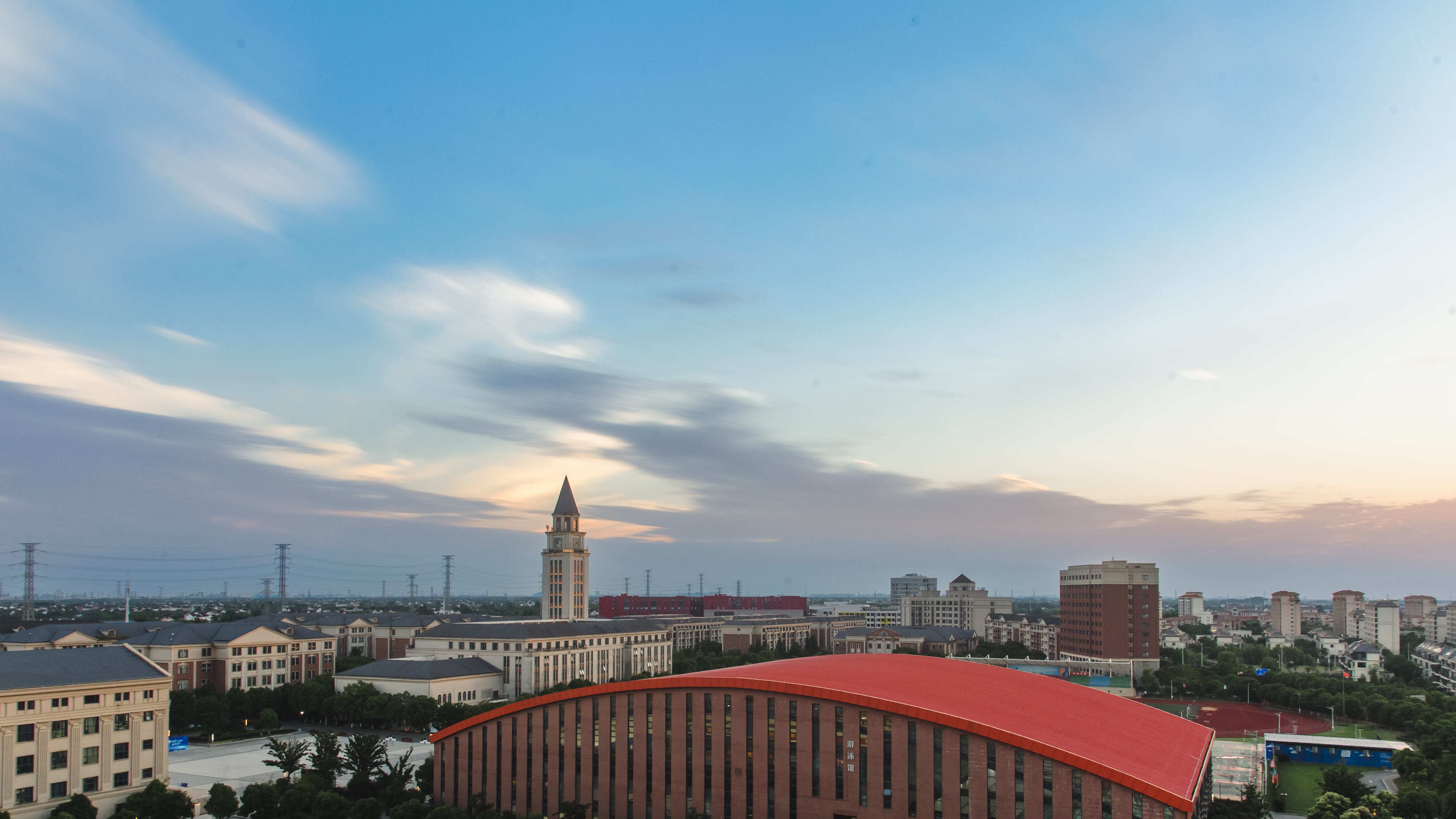
Moving forward, the university will take this architectural restructuring as its starting point, closely following the New Double High construction orientation of high-level educational capacity and high-quality industry-education integration. It will continue to deepen the educational path of building clusters based on industry, and building schools based on clusters, solidly advance connotation project construction, and continuously strengthen the foundational capabilities for cultivating technical and skilled talent. The university will anchor its goal of becoming a nationally top-tier vocational undergraduate university, providing more robust talent support and intellectual backing for Shanghai's 3+6 key industrial system and the high-quality development of the regional economy.