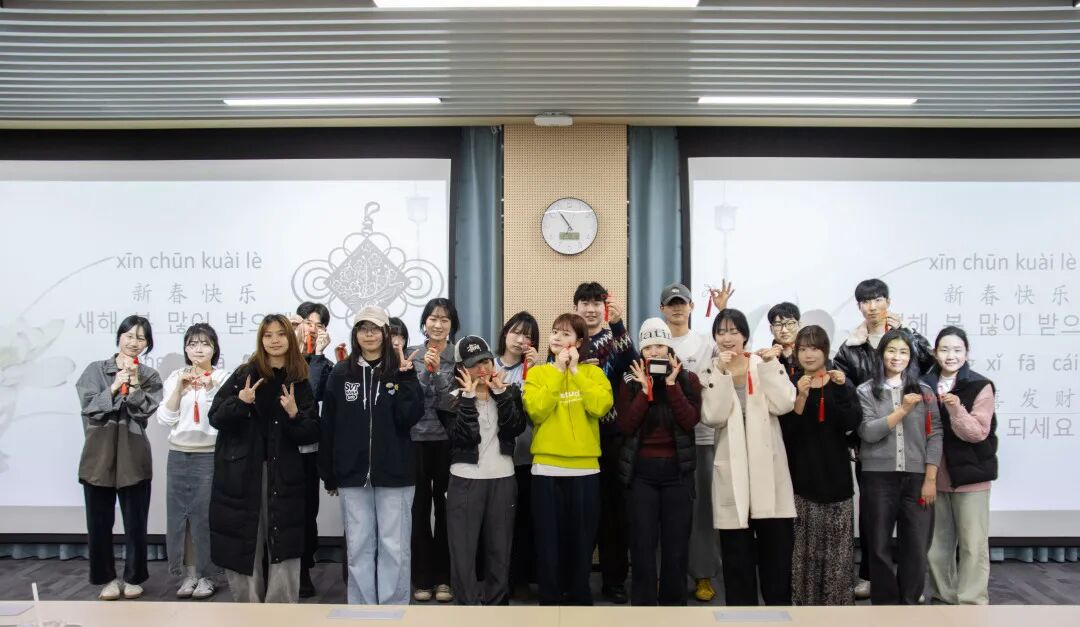
A single red cord weaves auspicious meanings; a vivid painting sketches the charm of Jiangnan; a signature dish reveals the craftsmanship of Chinese cuisine. Recently, participants of the 2025 China–Korea Winter Camp from Korea visited hands-on workshops, the School of Culinary Arts and Hospitality Management, and art studios, engaging in practical activities and culinary experiences to deeply appreciate the unique appeal of China’s intangible cultural heritage and traditional food culture.
I. The Art of Knots: Blessings Woven by Hand
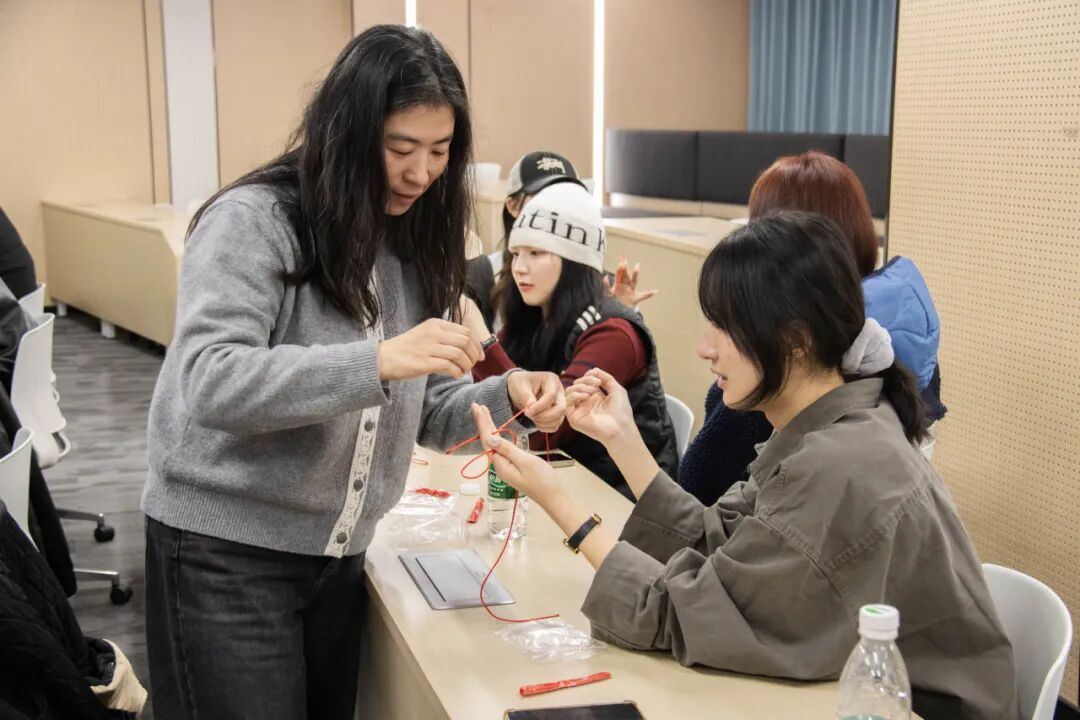
The Chinese knotting workshop began with detailed instruction from the teacher. Holding red cords, Korean participants learned techniques such as threading, looping, braiding, and tightening. From start to finish, a single continuous cord symbolized the unbroken thread of Chinese cultural inheritance. As the word “knot” (结) shares a homophonic link with “auspiciousness” (吉), these small knots carry heartfelt wishes for peace, harmony, and reunion.
II. A Culinary Encounter for the Senses
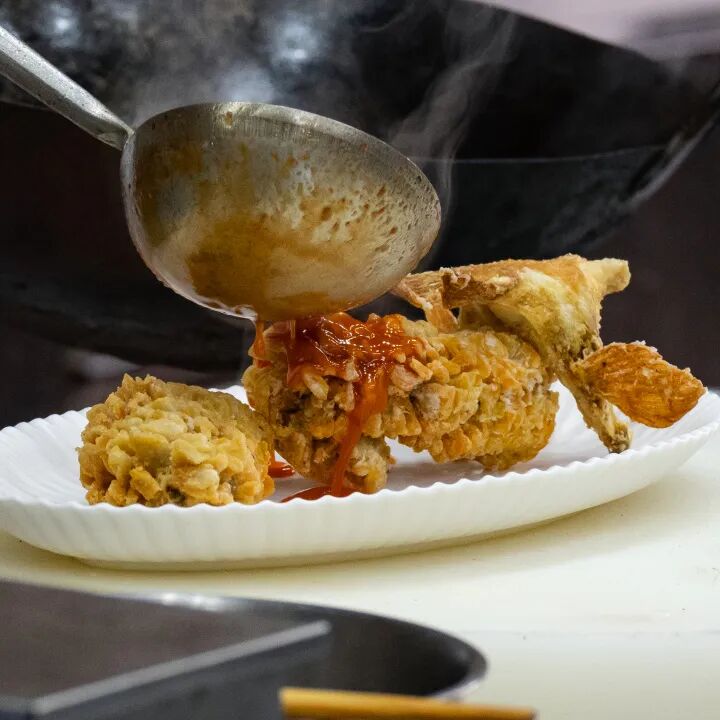
At the School of Culinary and Hotel Management, the classic dish Squirrel-Shaped Mandarin Fish took center stage. Students demonstrated the full process—from deboning and decorative cutting to frying and saucing. When the hot sauce was poured over the crispy fish, the sizzling sound echoed a squirrel’s chirp, delighting both the ear and the eye while conveying auspicious symbolism. Guided by instructors, Korean students also tried key steps themselves, experiencing the finesse of Chinese culinary techniques firsthand. Tasting the dish, they savored the crisp exterior and tender interior with its sweet-and-sour balance—experiencing not only authentic Jiangnan flavors but also the harmony of form, sound, taste, and meaning in Chinese cuisine.

III. Jinshan Farmer Paintings + VR Experience
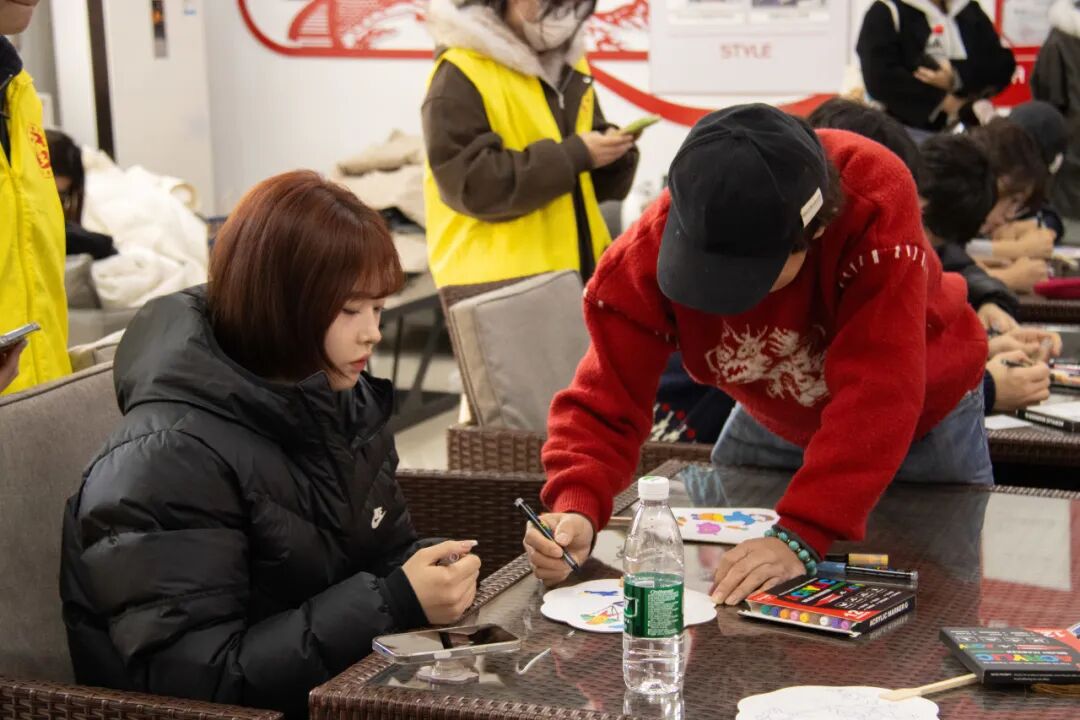
As an item of Shanghai’s intangible cultural heritage, Jinshan farmer paintings captivated participants with their bold colors, full compositions, and rustic charm. Under the guidance of artists, participants dipped their brushes into vibrant pigments, drawing on techniques from folk arts such as paper-cutting and embroidery to depict pastoral life in the Jiangnan region.
Later, wearing VR headsets, Korean friends were instantly “transported” into the painted scenes—whitewashed walls, black-tiled roofs, arched bridges, and flowing streams. The landscapes they had just painted came alive in virtual space. This fusion of traditional art and modern technology offered a fresh perspective on the poetic beauty of the Chinese countryside.

From fingertips to taste buds, from canvas to virtual worlds, these three experiences connected multiple dimensions of traditional Chinese culture. Through hands-on practice, Korean participants touched the living threads of cultural heritage; through interaction and exchange, they built bridges of mutual understanding. This immersive cultural journey not only breathed new vitality into intangible heritage and traditional cuisine, but also brought young people from China and Korea closer together—adding a warm and vivid chapter to the story of cross-civilizational exchange.